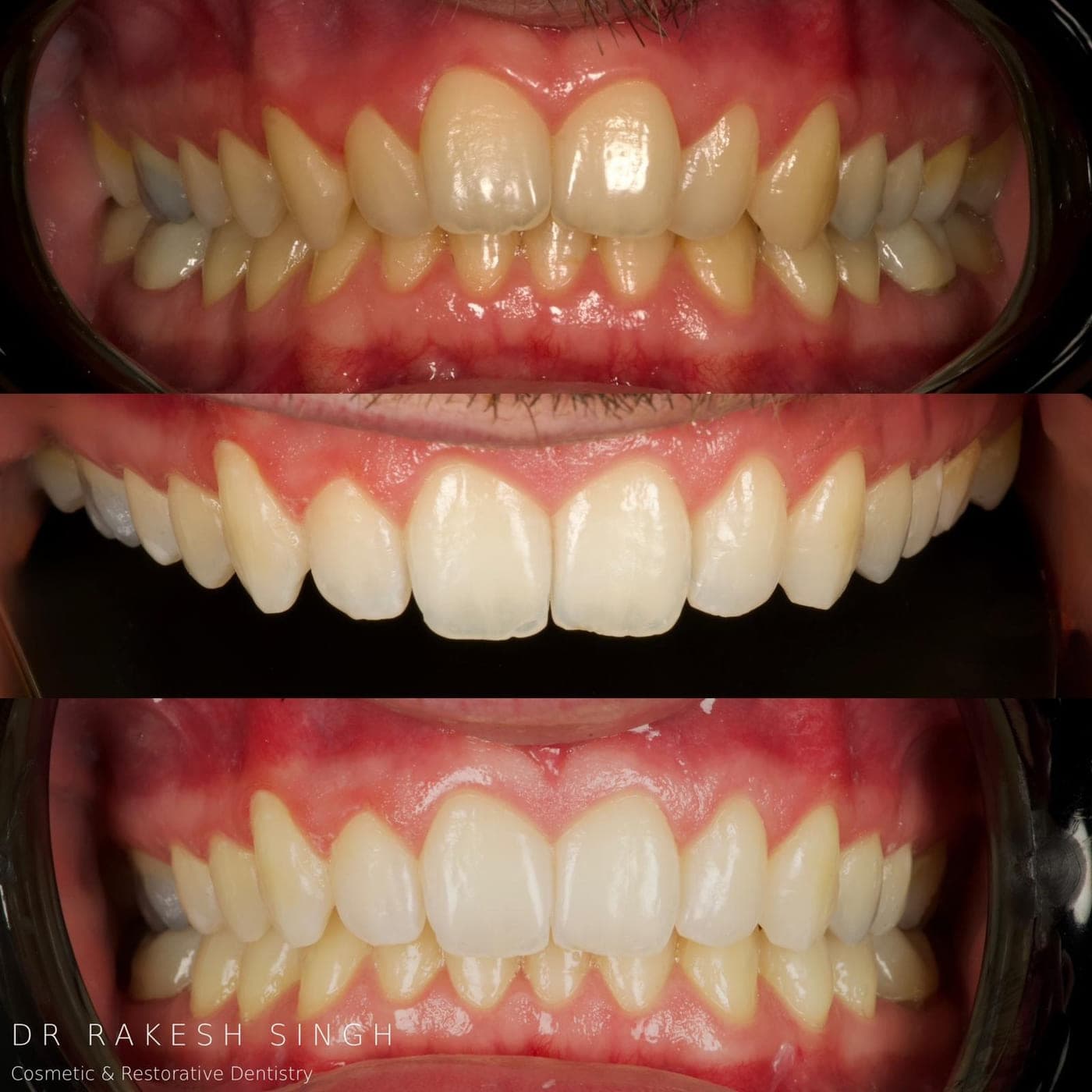
Clear aligners (like Invisalign)
Removable, near-invisible aligners that move teeth gradually into a planned position.
From £2,899
Cosmetic
These are reasons people come in to discuss it, not a checklist that decides whether it is right for you.
Bonding is meticulously hand-sculpted, tooth by tooth, and shaped against the rest of your smile to fit in with your face. The work is done under isolation, so the composite bonds to a clean surface and lasts as long as possible.
Where teeth are crowded, rotated or heavily discoloured, bonding can mask a certain amount but not everything. Dr Rakesh may recommend alignment or whitening first. This often produces a much better, longer-lasting result.
A look at what you would like changed, an examination of the teeth and bite, and photographs.
The proposed shapes are designed. Where several teeth are involved, a template can be used to guide the build-up.
The teeth are isolated and composite is placed and shaped in layers, then contoured and polished.
A short follow-up to check the bite, the margins and the finish.
Often little or none, which is one of the reasons bonding is considered before porcelain. Whether any reshaping is needed depends on the starting position of the tooth and is discussed beforehand.
Composite takes up stain more readily than enamel or porcelain, particularly at the margins. Polishing at review appointments helps, and how quickly it happens depends on diet and habits.
Bonding is more conservative and can be adjusted or repaired; porcelain is harder-wearing and holds its shade better. Which is appropriate depends on how much needs changing, and both are discussed at the consultation.
Where the tooth underneath has not been prepared, composite can generally be taken off and the tooth returned close to its previous state. This is confirmed for your own teeth at the assessment.
Dental treatment is planned for the individual. Whether any treatment described here is appropriate for you can only be established at a clinical assessment, and the options discussed with you may differ from those set out on this page. Photographs show the outcome for one patient and are not a prediction of anyone else’s result.
Removable, near-invisible aligners that move teeth gradually into a planned position.
From £2,899
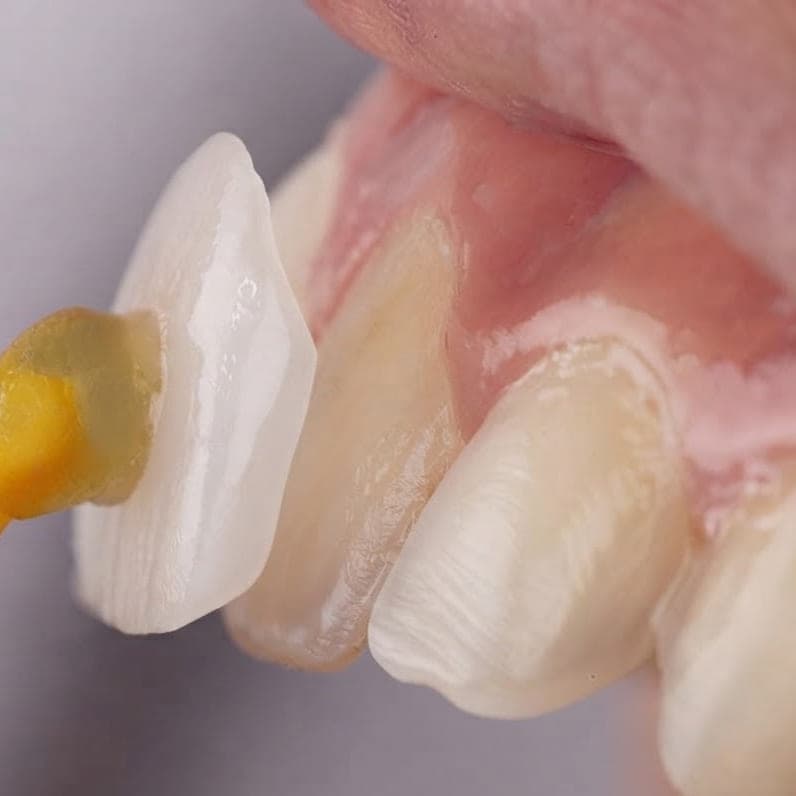
Thin, individually made porcelain facings that change the shape, edge line and shade of front teeth.
From £850 per tooth
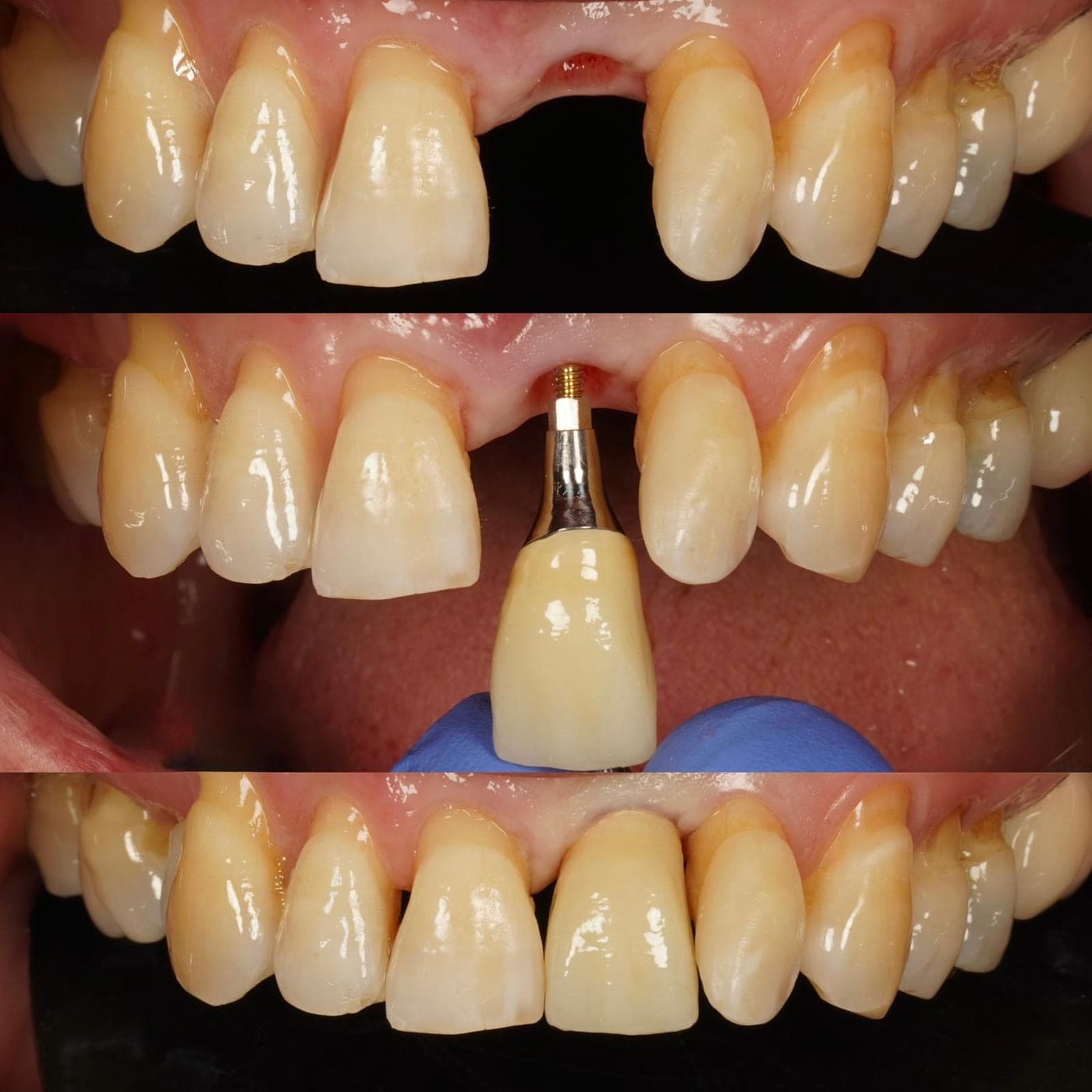
A crown supported by an implant, replacing a missing tooth without involving the teeth either side.
FeeConfirmed at consultation
An examination, a conversation about what you would like to change, and a written plan to take away.