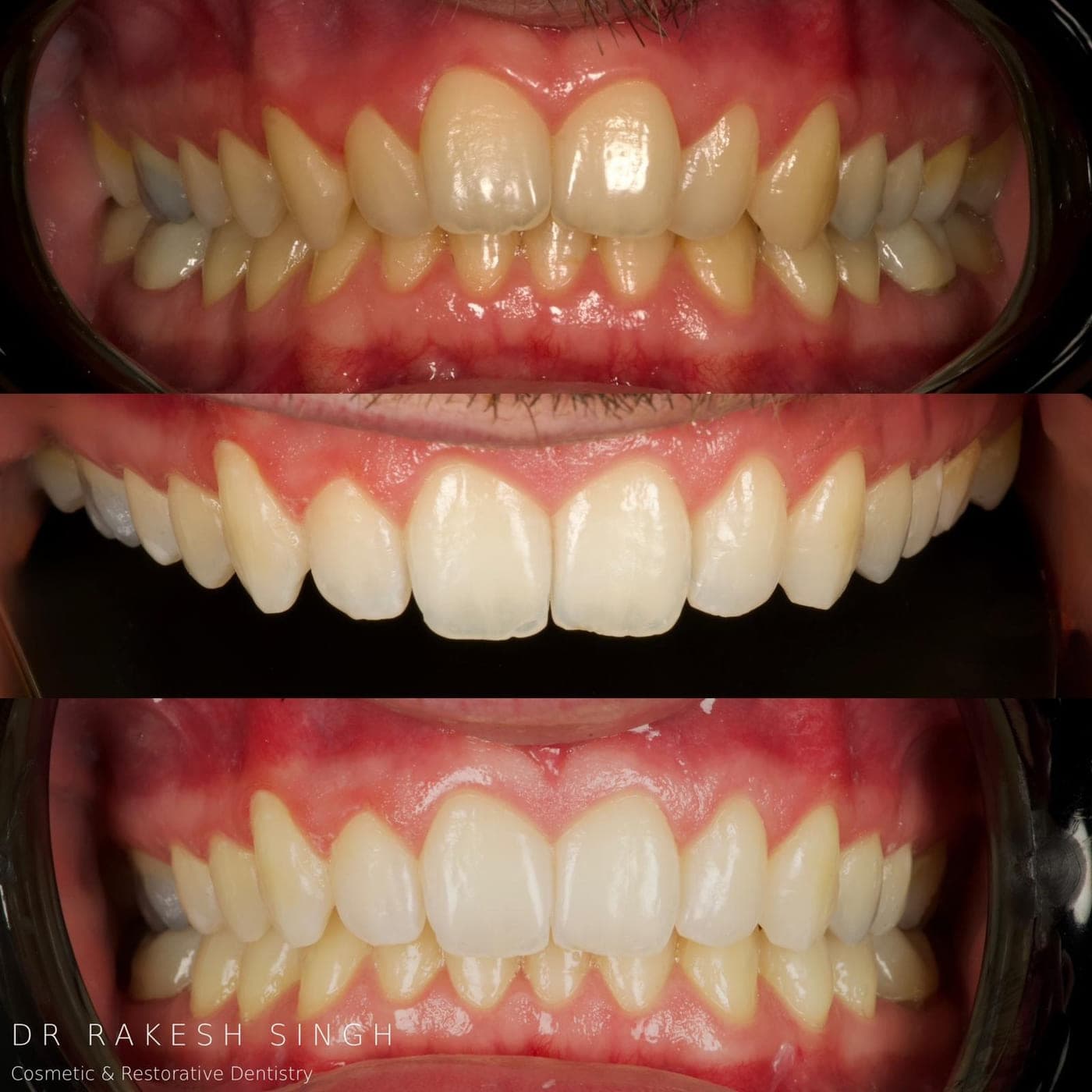
Clear aligners (like Invisalign)
Removable, near-invisible aligners that move teeth gradually into a planned position.
From £2,899
Restorative
These are reasons people come in to discuss it, not a checklist that decides whether it is right for you.
A crown wraps and protects a tooth that has broken down or been heavily filled, holding it together so it can keep doing its job for years rather than fracturing.
Replacing a large, failing filling with a crown or an onlay at the right time is often what saves a tooth, before it splits and has to be taken out and replaced with an implant.
A bridge replaces a missing tooth by joining to the teeth on either side. Where those teeth are otherwise healthy, that is weighed against the implant option at the assessment.
The assessment establishes how much sound tooth remains, whether the tooth has a reasonable long-term prognosis, and which restoration gives the best balance between protecting it and preserving what is left.
Examination and radiographs to establish what remains of the tooth and whether it can support a restoration.
The tooth is prepared, records and shade information are taken, and a temporary restoration is fitted.
The restoration is tried in and checked with you before it is cemented, then the bite is adjusted.
A follow-up to check the margins, the gum and how the restoration is settling.
Often, though a very dark underlying tooth is more demanding and may need a different material choice. What is realistic for your tooth is discussed before treatment begins.
They solve different problems and involve different amounts of intervention. The options that apply to your case, including doing nothing, are set out at the assessment.
Some sensitivity after preparation is common and usually settles. What to expect and when to get in touch is explained at the appointment.
Dental treatment is planned for the individual. Whether any treatment described here is appropriate for you can only be established at a clinical assessment, and the options discussed with you may differ from those set out on this page. Photographs show the outcome for one patient and are not a prediction of anyone else’s result.
Removable, near-invisible aligners that move teeth gradually into a planned position.
From £2,899
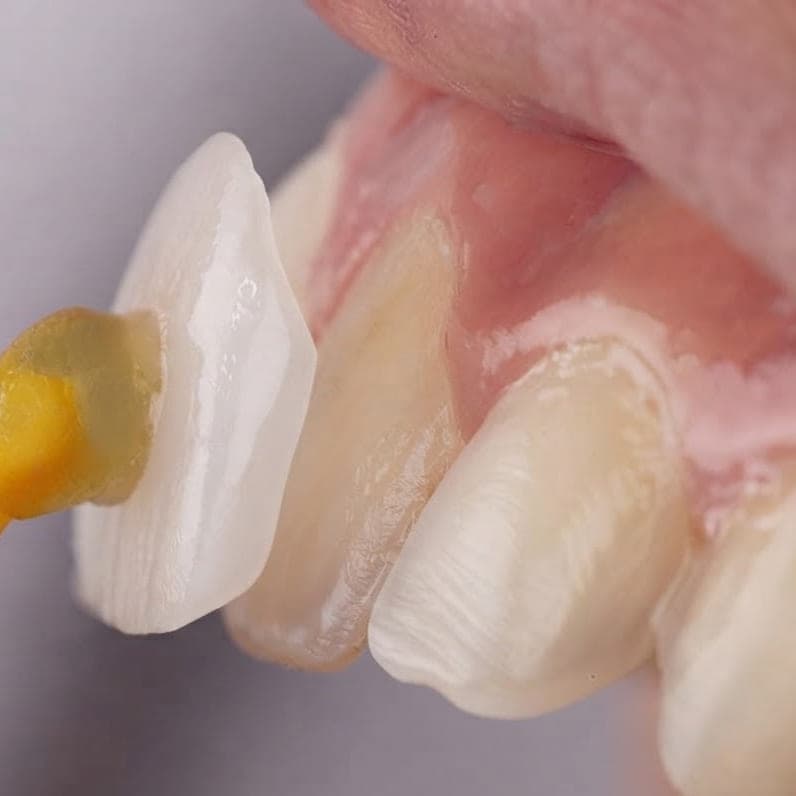
Thin, individually made porcelain facings that change the shape, edge line and shade of front teeth.
From £850 per tooth
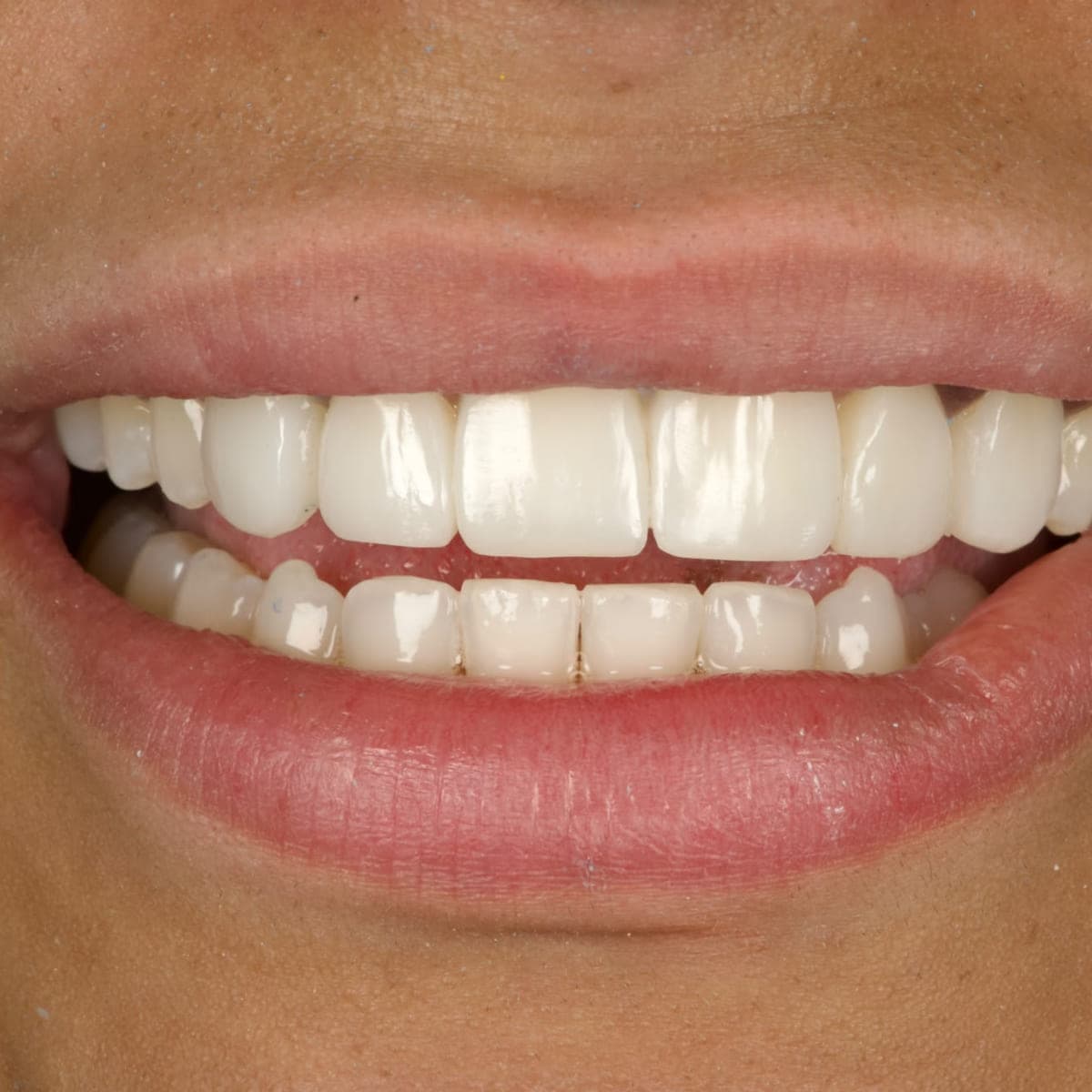
Tooth-coloured composite shaped directly onto the tooth to rebuild edges, close gaps or even out proportions.
From £300 per tooth
An examination, a conversation about what you would like to change, and a written plan to take away.