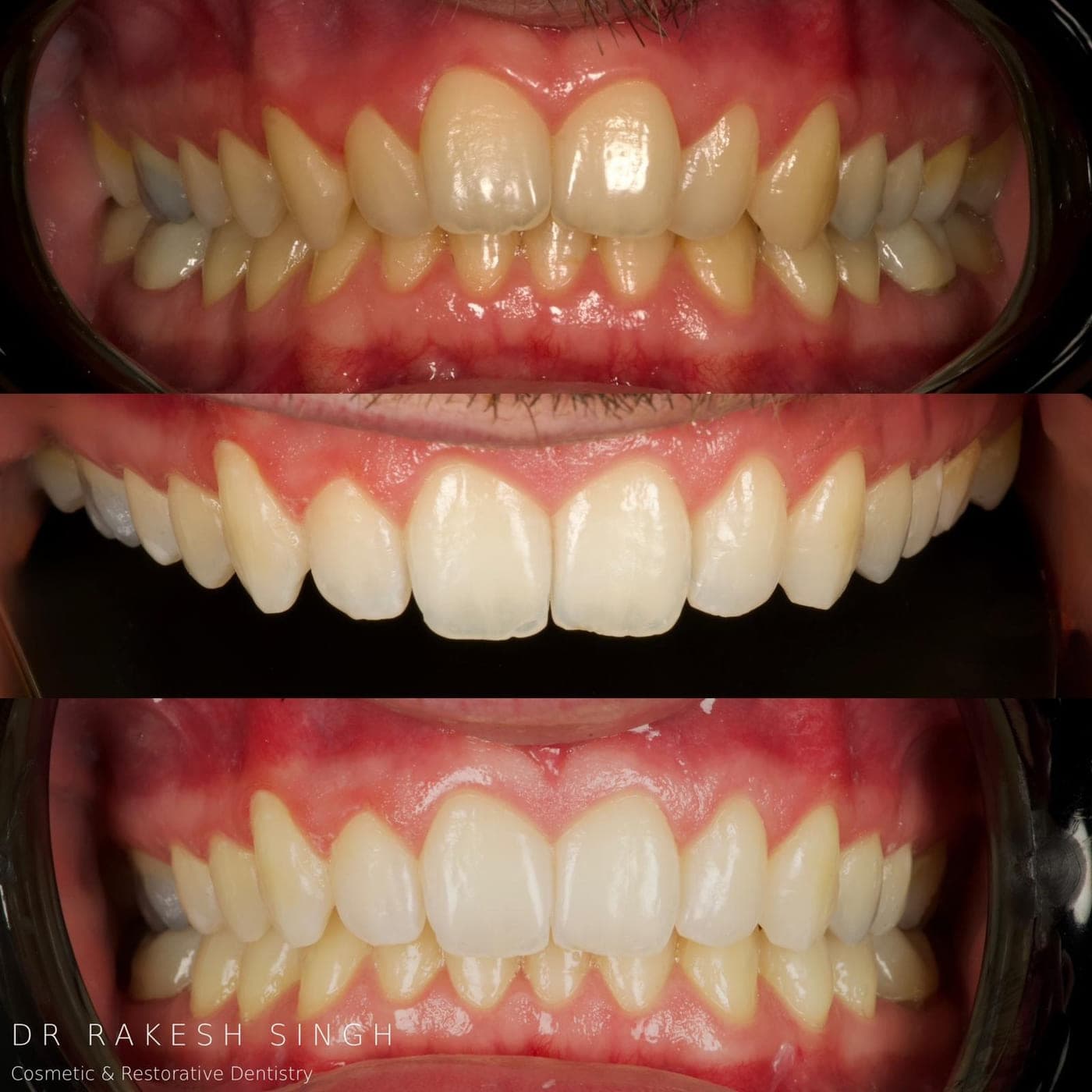
Clear aligners (like Invisalign)
Removable, near-invisible aligners that move teeth gradually into a planned position.
From £2,899
Restorative
These are reasons people come in to discuss it, not a checklist that decides whether it is right for you.
Metal fillings do not bond to the tooth structure. They sit in the tooth rather than joining to it, which leaves the tooth more likely to fracture over the years and lets decay start underneath the filling, out of sight.
Replacing one with a tooth-coloured restoration bonds to the remaining tooth, rebuilds its shape and helps protect it. Where a tooth is mostly filling material, an onlay or a crown holds the cusps together more reliably than another direct filling.
There is a cosmetic reason too: tooth-coloured restorations improve the appearance of the smile, especially on the lower teeth that can show when you talk or laugh.
An examination with radiographs establishes whether a restoration is failing and what remains of the tooth beneath it. Replacement is recommended where there is a clinical reason for it.
Assessment of the existing restorations, radiographs, and a check of the bite and any cracks.
An agreed sequence, with the likely restoration type for each tooth and what might change once the old filling is out.
The old restoration and any decay are removed, and the tooth is rebuilt or prepared for a laboratory-made restoration.
A follow-up to check the bite, the contact points and the gum around the new restoration.
White fillings last longer and preserve more of the tooth in the long term. Whether you change your fillings is up to you, but Dr Rakesh may recommend a crown or an onlay where a tooth is mostly filling material and at risk of fracture.
Modern materials perform well when the tooth around them is sound and the restoration is placed under proper isolation. Where too little tooth remains, an onlay or crown is the more reliable option.
Some sensitivity after a deep restoration is common and usually settles. What to expect, and when to get in touch, is explained at the appointment.
The plan is discussed again before going further, so you know what has been found and what the options are rather than being told afterwards.
Dental treatment is planned for the individual. Whether any treatment described here is appropriate for you can only be established at a clinical assessment, and the options discussed with you may differ from those set out on this page. Photographs show the outcome for one patient and are not a prediction of anyone else’s result.
Removable, near-invisible aligners that move teeth gradually into a planned position.
From £2,899
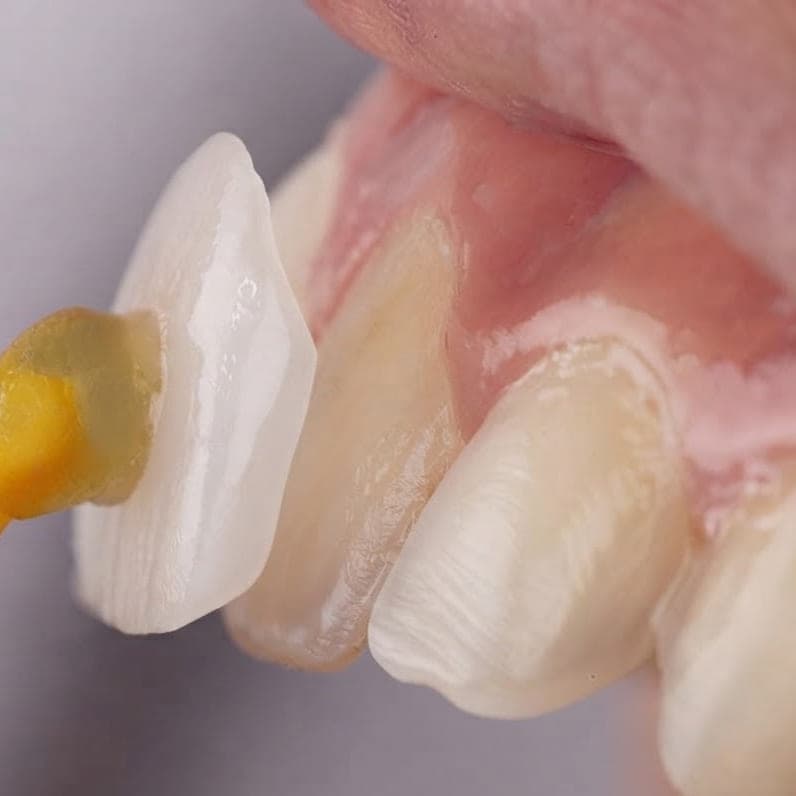
Thin, individually made porcelain facings that change the shape, edge line and shade of front teeth.
From £850 per tooth
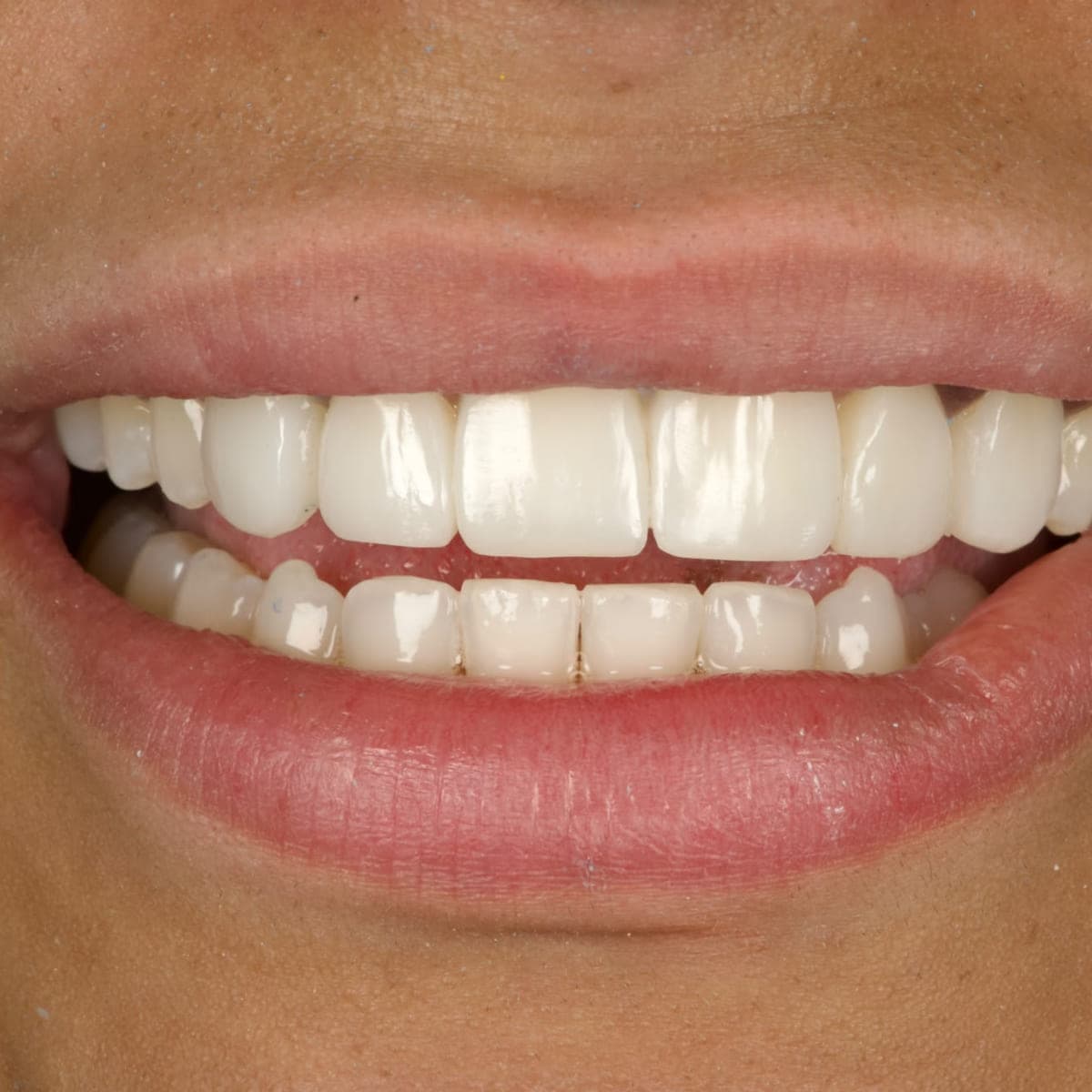
Tooth-coloured composite shaped directly onto the tooth to rebuild edges, close gaps or even out proportions.
From £300 per tooth
An examination, a conversation about what you would like to change, and a written plan to take away.