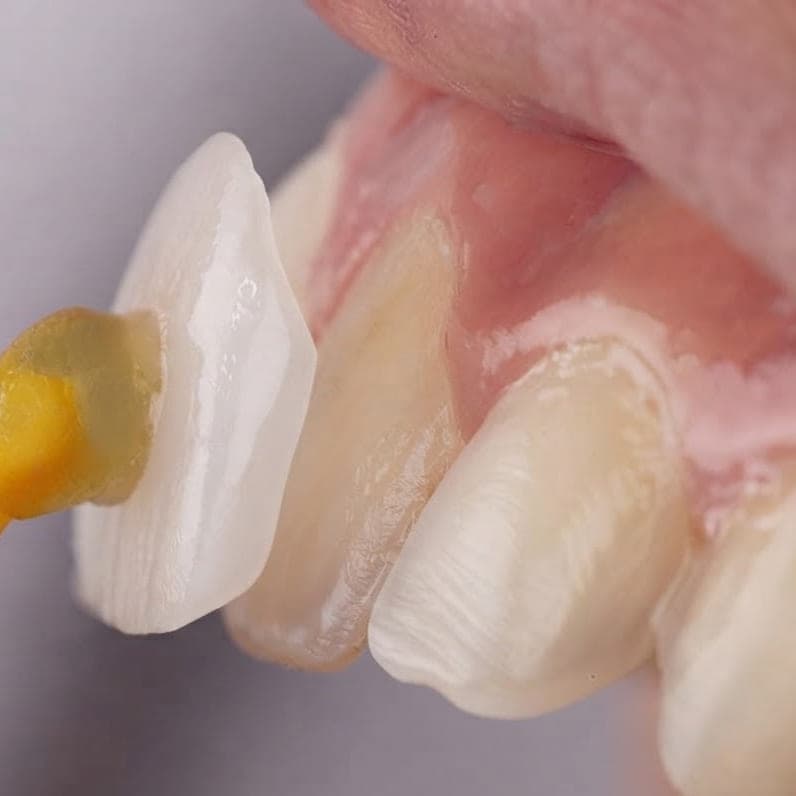
Porcelain veneers
Thin, individually made porcelain facings that change the shape, edge line and shade of front teeth.
From £850 per tooth
Orthodontics
These are reasons people come in to discuss it, not a checklist that decides whether it is right for you.
Treatment begins with records: photographs, a digital scan and an examination of the teeth, gums and bite. From these a plan is produced showing the intended sequence of movements.
Aligners are then worn as directed and changed on a set schedule, with review appointments to check that the teeth are tracking as planned. Small tooth-coloured attachments are bonded to some teeth to make particular movements possible.
Alignment changes the position of teeth. It does not change their colour or shape, so whitening or bonding is sometimes planned afterwards to finish the result.
Teeth tend to move over a lifetime. Retainers are part of the treatment, not an optional extra, and are needed for as long as you want the position held.
What you would like to change, an examination, and an honest view of what alignment can and cannot do. The teeth and gums must be healthy, with no active gum disease or untreated decay, before treatment can begin.
Photographs, a digital scan and any radiographs needed. A plan is prepared showing the proposed sequence of movements.
Attachments are placed where the plan requires them and the first aligners are fitted, with instructions on wear and cleaning.
Periodic appointments to check the teeth are moving as planned and to hand over the next stage of aligners.
In some cases a further series of aligners is needed to bring the teeth to their final position. This refinement is planned in and is included in the treatment fee.
Final adjustments, any planned whitening or bonding, and retainers to hold the new position.
Most cases take from 6 to 12 months to complete, depending on how far the teeth need to move. The expected number of stages is set out in your plan, from your own records, before you commit to treatment.
Around 22 hours a day. They are taken out only to eat, to drink anything other than water, and to clean your teeth. Aligners only work while they are in the mouth, so treatment slows if this is not met.
Aligners are clear and thin, and most people find they are not obvious in conversation.
Retainers hold the position. These are discussed as part of the plan, and the arrangements for replacing them over time are set out before treatment starts.
Dental treatment is planned for the individual. Whether any treatment described here is appropriate for you can only be established at a clinical assessment, and the options discussed with you may differ from those set out on this page. Photographs show the outcome for one patient and are not a prediction of anyone else’s result.
Thin, individually made porcelain facings that change the shape, edge line and shade of front teeth.
From £850 per tooth
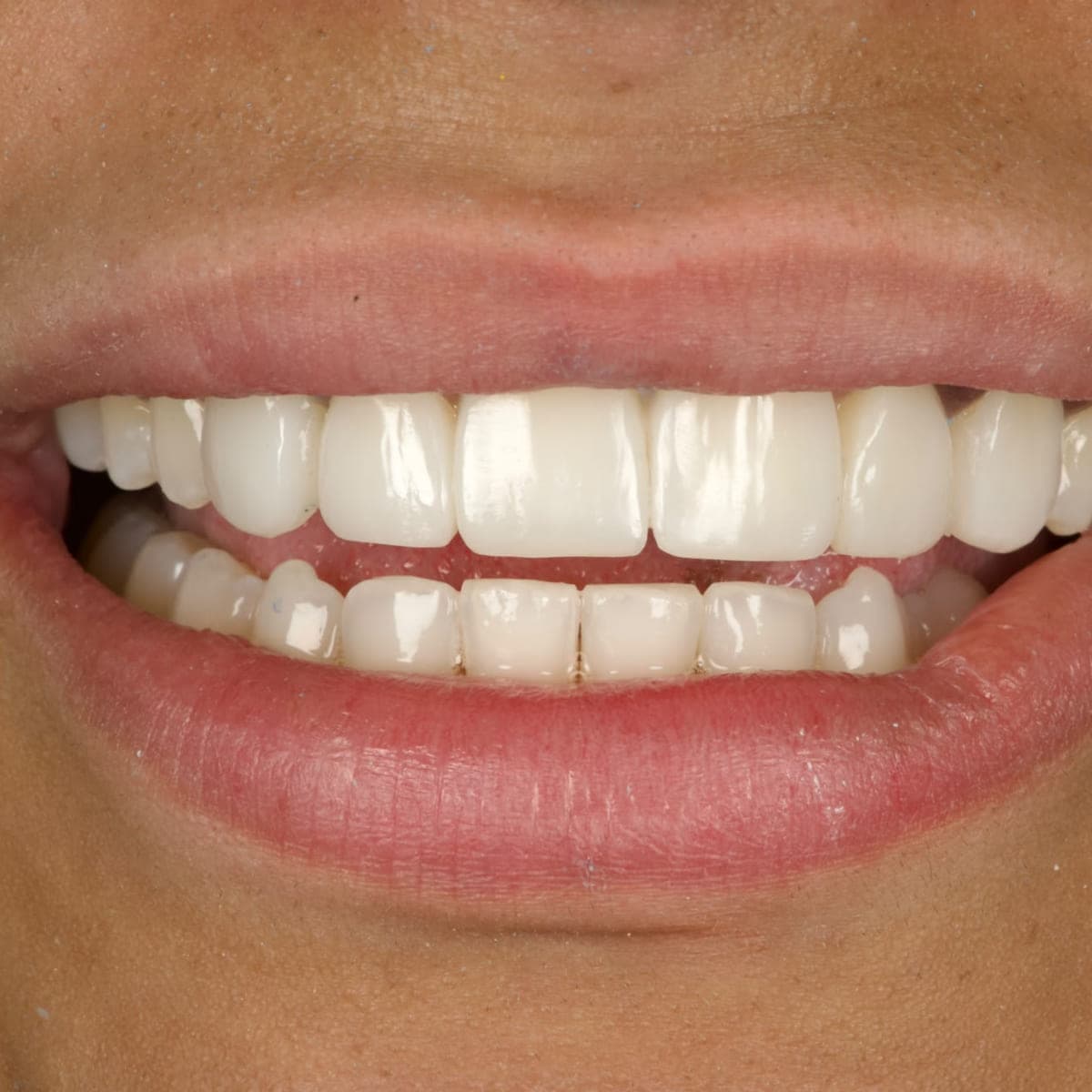
Tooth-coloured composite shaped directly onto the tooth to rebuild edges, close gaps or even out proportions.
From £300 per tooth
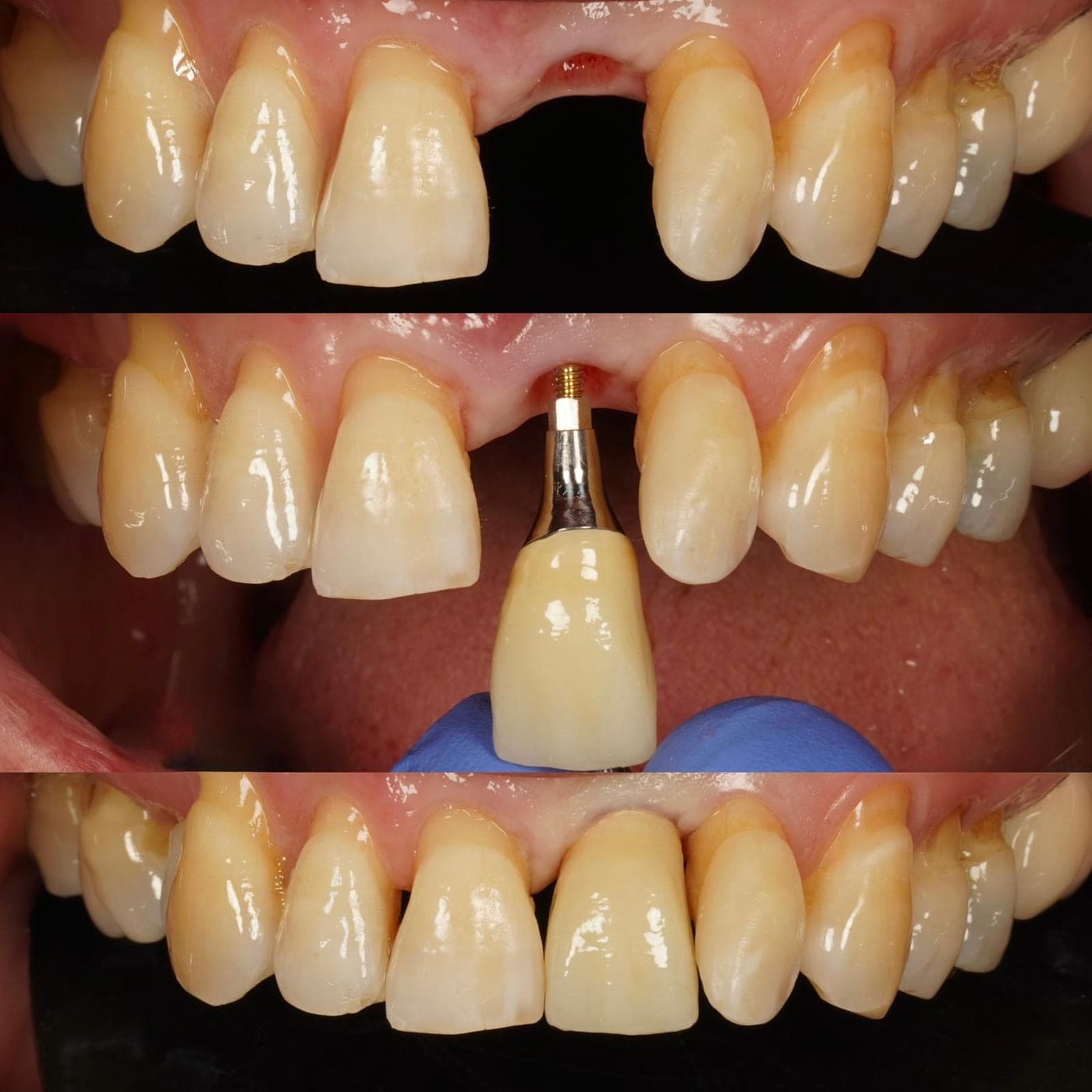
A crown supported by an implant, replacing a missing tooth without involving the teeth either side.
FeeConfirmed at consultation
An examination, a conversation about what you would like to change, and a written plan to take away.