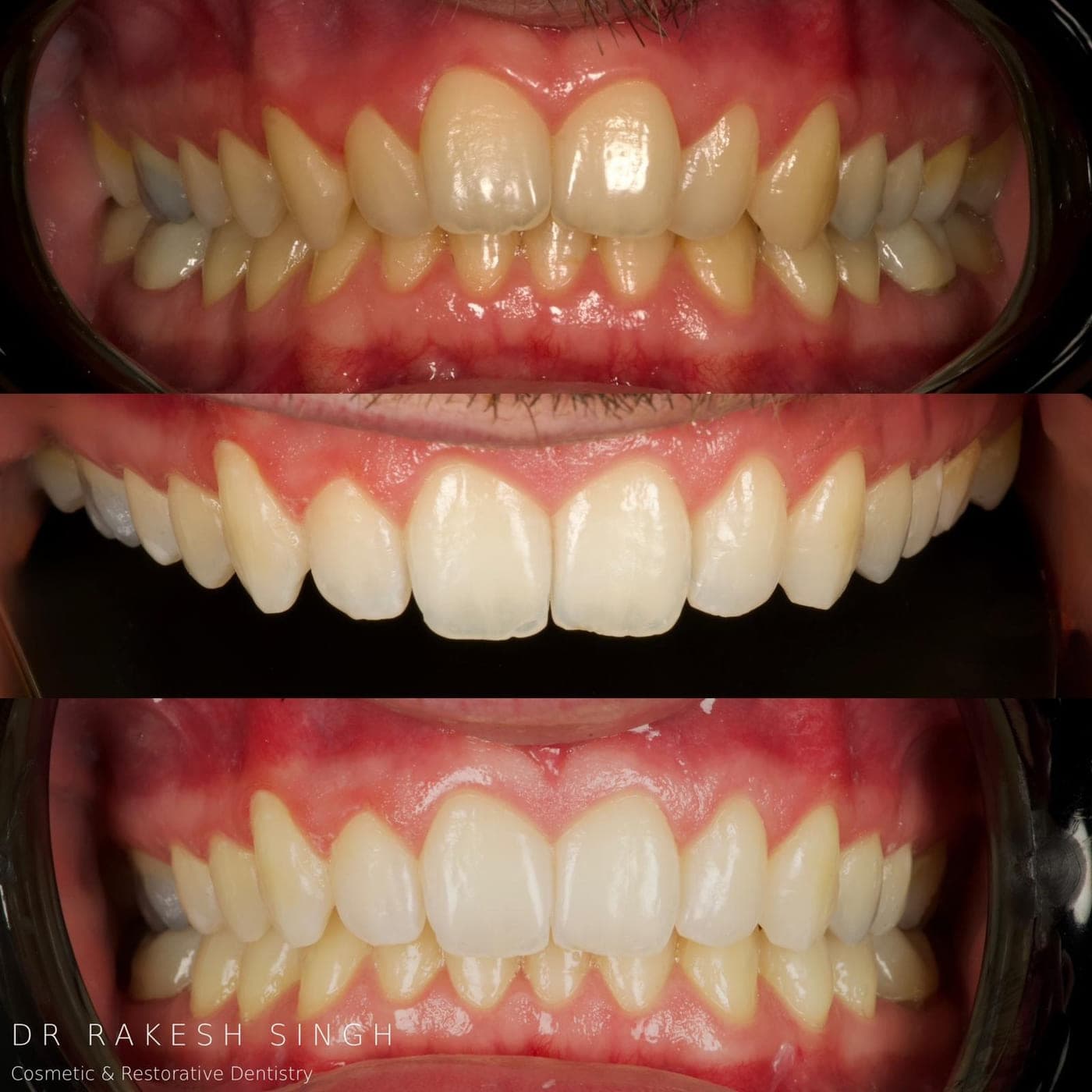
Clear aligners (like Invisalign)
Removable, near-invisible aligners that move teeth gradually into a planned position.
From £2,899
Restorative
These are reasons people come in to discuss it, not a checklist that decides whether it is right for you.
An implant is the closest thing there is to replacing a natural tooth. It sits in the bone on its own foundation, so a crown or bridge can be built on top without touching (or relying on) the teeth beside it.
Because it stands on its own, an implant looks, feels and works like your own tooth, and it protects the neighbouring teeth that a conventional bridge would otherwise have to be cut down to support.
Every case is planned around where the new tooth needs to sit, so the result fits your bite and your smile. Dr Rakesh sets out exactly what is involved for you at your consultation.
A look at the gap and what you would like, with the scans needed to plan the implant position.
The new tooth is designed first, and the implant position is planned from it, with the stages and fees set out in writing.
The implant is placed and then left to settle into the bone before the final tooth is made.
The crown or bridge is made to the plan, then fitted and matched to sit naturally alongside your other teeth.
No, that is the main advantage of an implant over a bridge. It stands on its own foundation, so the healthy teeth beside the gap are left untouched.
That is the aim. The crown is made and shaded to sit naturally alongside your other teeth, so it is not obvious which tooth was replaced.
A very long time when it is looked after. An implant is designed to be a lasting replacement, and with good care it can serve you for many years.
Dental treatment is planned for the individual. Whether any treatment described here is appropriate for you can only be established at a clinical assessment, and the options discussed with you may differ from those set out on this page. Photographs show the outcome for one patient and are not a prediction of anyone else’s result.
Removable, near-invisible aligners that move teeth gradually into a planned position.
From £2,899
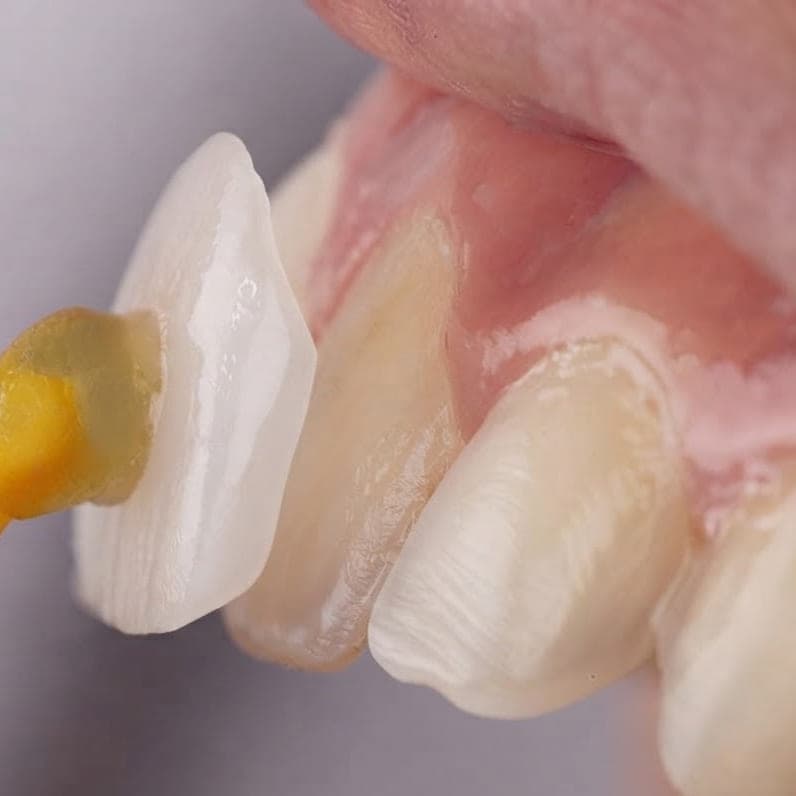
Thin, individually made porcelain facings that change the shape, edge line and shade of front teeth.
From £850 per tooth
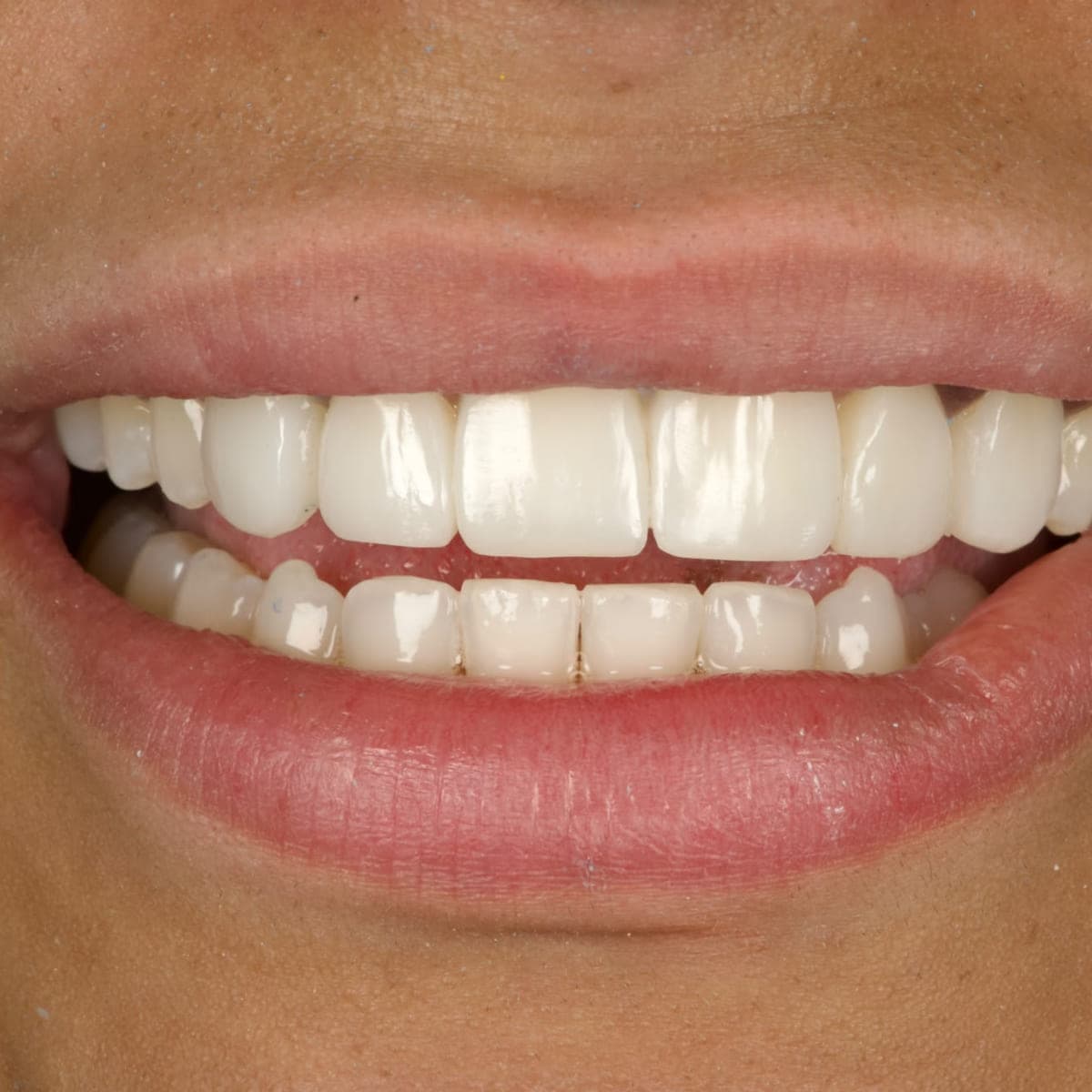
Tooth-coloured composite shaped directly onto the tooth to rebuild edges, close gaps or even out proportions.
From £300 per tooth
An examination, a conversation about what you would like to change, and a written plan to take away.